Fear, Pressure and the COVID Vaccine: Why Western Uptake Was So High
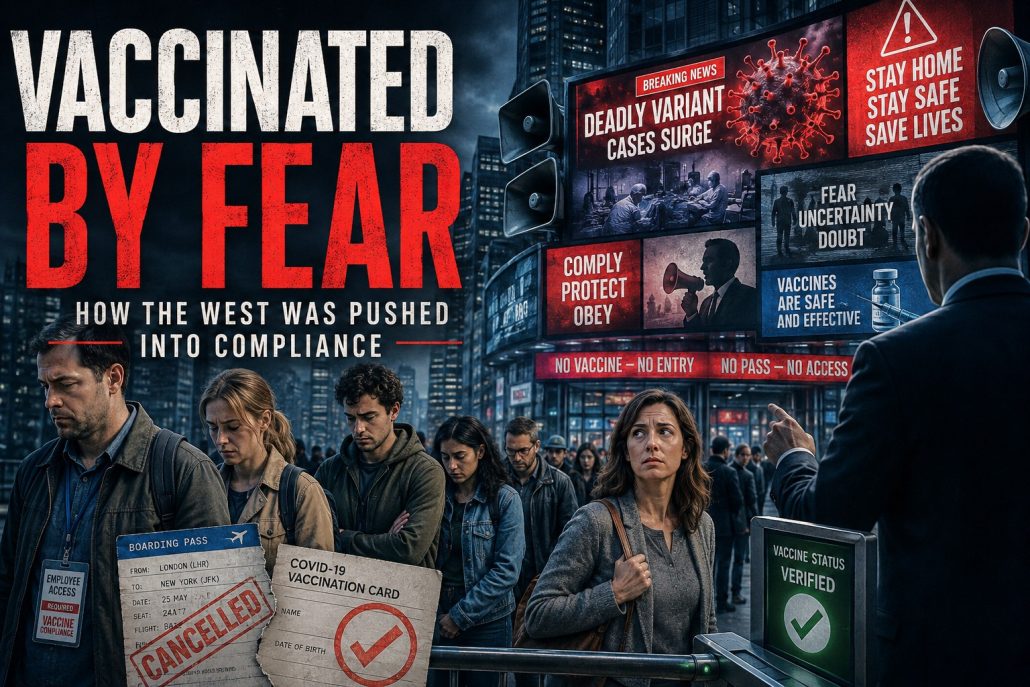
During COVID, people across the developed world were subjected to an extraordinary campaign of fear and pressure.
Television networks displayed daily case and death counts. Officials warned that the unvaccinated endangered others. Employers, universities, hospitals and governments introduced vaccine requirements, while travel and access to public life were often restricted.
For many people, vaccination did not feel like a freely made medical decision. It felt like the price of keeping a job, attending school, travelling or participating in society.
That pressure had consequences. In New York City alone, approximately 1,780 municipal workers were dismissed for refusing to comply with the city’s vaccine requirement. Research has also shown that messages emphasizing the dangers of remaining unvaccinated can increase willingness to take a vaccine. (AP News)
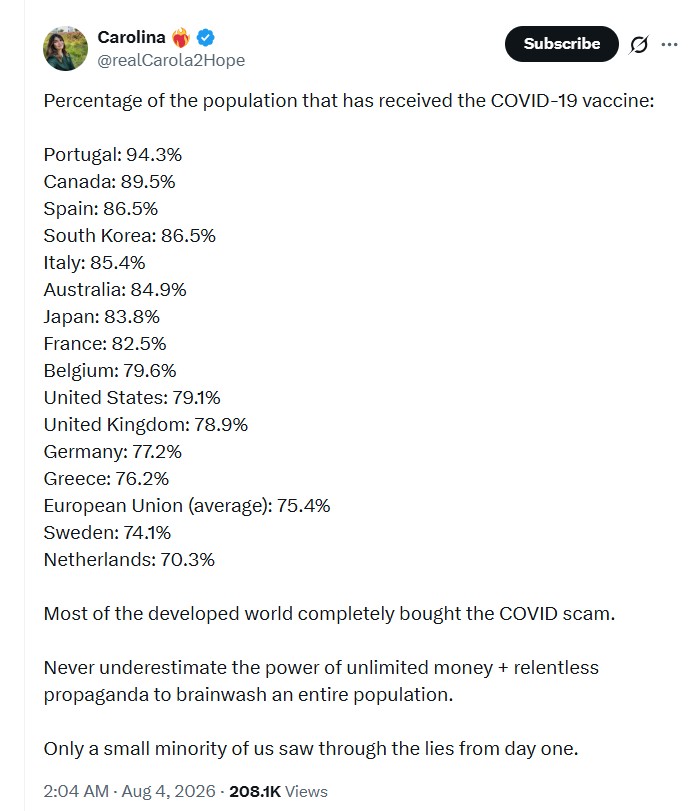
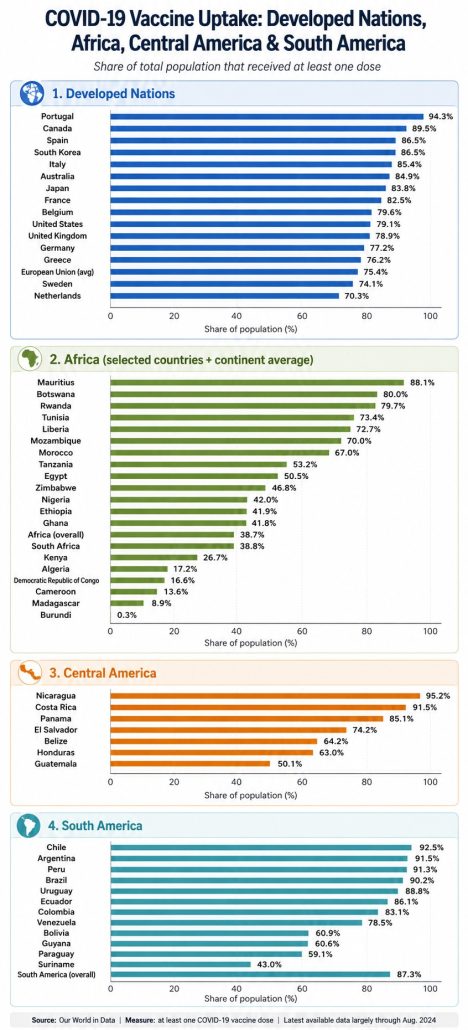
The result was extremely high uptake across much of the developed world. At least one dose was received by 94.3% of Portugal’s population, 89.5% of Canada’s, 86.5% of Spain’s and 79.1% of the United States population. (Our World in Data)
Africa presents a striking contrast. Across the continent, only about 38.7% received at least one dose. Rates were 26.7% in Kenya, 17.2% in Algeria, 16.6% in the Democratic Republic of Congo and 8.9% in Madagascar. (Our World in Data)
Limited access played a role, but it was not the whole story. African studies found widespread concern about side effects, distrust of pharmaceutical companies and governments, and skepticism shaped by previous medical experiences and historical abuses. (PubMed Central (PMC))
Most Africans were not exposed to the same level of workplace mandates, media saturation and social pressure experienced in Western nations.
The figures therefore raise an uncomfortable question: How much of the developed world’s vaccine uptake reflected genuine informed consent—and how much resulted from fear, relentless messaging and the threat of exclusion or unemployment?
The numbers cannot answer that question by themselves. But they show why the extraordinary pressure applied during COVID should never be forgotten.