Dr. Tom Cowan revisits the 1954 measles experiments and raises questions about the methods still used in modern virology.
For decades, we’ve been told that scientists have successfully isolated the viruses responsible for infectious diseases. We’re expected to accept that the evidence is settled and that questioning established laboratory methods is somehow questioning science itself.
But what happens when we go back to the original experiments and examine what the researchers actually did?
In a recent interview, Dr. Tom Cowan revisited the groundbreaking 1954 experiments conducted by John Enders and Thomas Peebles, whose work helped establish the laboratory methods used to cultivate measles virus.
And he raised a question that deserves closer examination:
When scientists observe cells deteriorating in a laboratory culture, how do they establish what actually caused that deterioration?
The 1954 Experiment That Changed Virology
In 1954, John Enders and Thomas Peebles published a paper titled Propagation in Tissue Cultures of Cytopathogenic Agents from Patients with Measles.
Their research involved collecting blood and throat washings from patients diagnosed with measles and introducing those specimens into laboratory cultures containing human or monkey kidney cells.
After several days, the researchers observed changes in the cells.
These changes are known as cytopathic effects, or CPE. They can include abnormal cell structures, cell fusion, and cellular degeneration.
The researchers interpreted their findings as evidence that they had successfully cultivated the infectious agent responsible for measles.
Their work became an important milestone in virology.
But Dr. Cowan challenges the interpretation of these experiments.
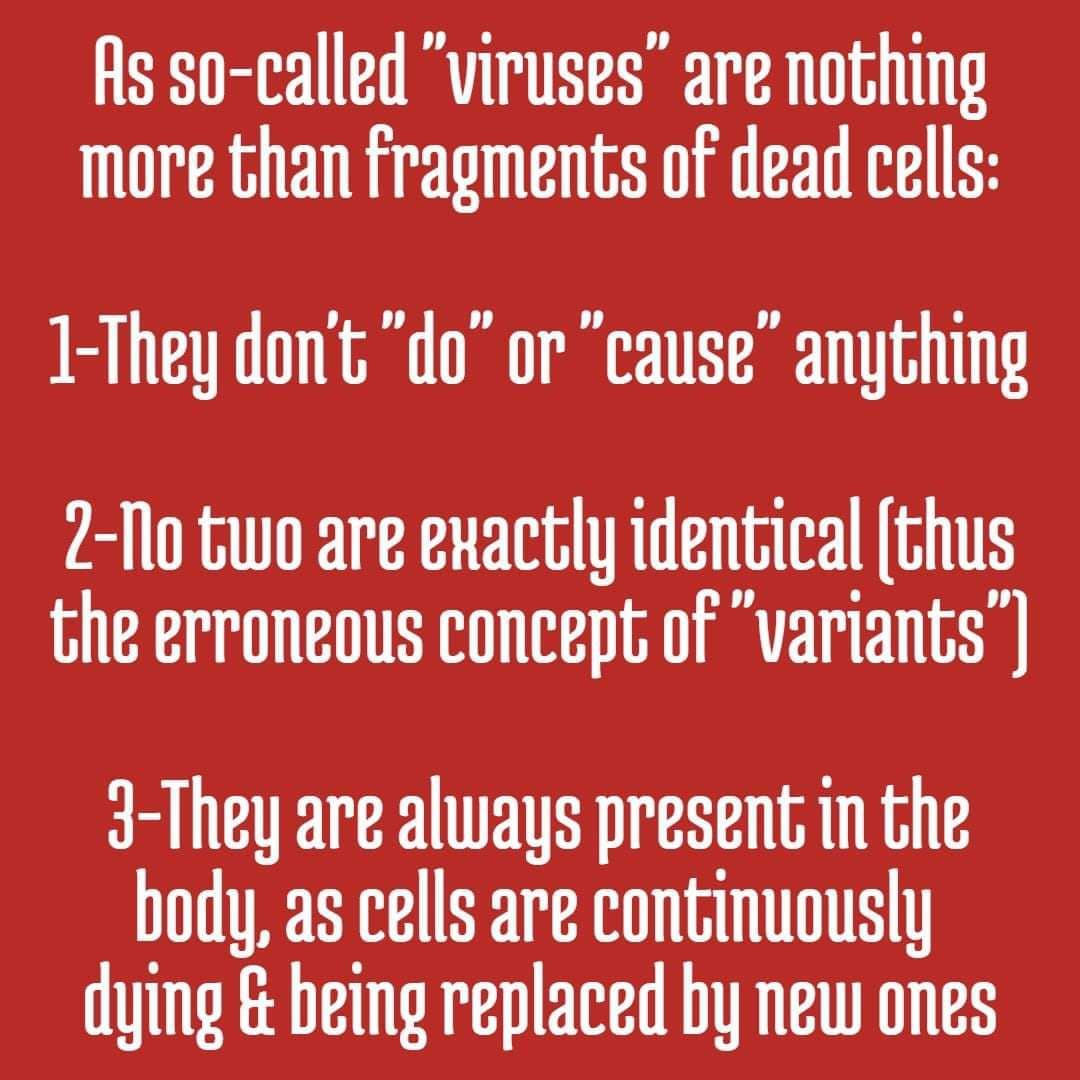
He argues that observing damaged cells in a laboratory culture does not, by itself, establish that a virus caused the damage.
And that’s where the discussion gets interesting.
What Happened to the Control Cells?
One of the most intriguing parts of the original Enders and Peebles paper concerns an observation involving monkey kidney cells that had not been inoculated with material from measles patients.
The researchers reported finding another agent in an uninoculated culture that produced cellular changes resembling those associated with their measles cultures.
In fact, they acknowledged that the appearances in unstained preparations could not be reliably distinguished.
Think about the significance of that observation.
If similar-looking damage can occur in a culture without material from a measles patient, then cell damage alone cannot serve as definitive proof of a particular virus.
That is a legitimate experimental concern, and it’s precisely why scientific controls matter.
There is another part of the paper that must also be acknowledged. Enders and Peebles reported that staining the cells revealed differences between the two effects. They also found differences in how the cultures reacted with measles antibodies.
The researchers therefore did not conclude that the two agents were identical.
Nevertheless, Cowan’s broader question remains worth discussing: how do researchers distinguish damage caused by a particular infectious agent from damage caused by other factors in a complicated laboratory system?
Is Cell Damage the Same as Virus Isolation?
This is the heart of Cowan’s argument.
When most people hear that a virus has been isolated, they probably imagine a scientist taking a specimen from a sick patient, separating a virus from everything else, and examining that purified material.
But laboratory virology uses the term isolation differently.
Scientists commonly cultivate viruses by introducing clinical material into susceptible cells and looking for evidence of viral replication.
These cultures may involve nutrient media, antibiotics, and other substances needed to maintain the experimental conditions.
Cowan questions whether conclusions drawn from such systems adequately distinguish the alleged viral effects from the effects of the experimental procedures themselves.
I believe it’s reasonable to ask researchers to explain those distinctions clearly.
However, cytopathic effects are not the only evidence used to identify viruses. Researchers also use antibody testing, genetic sequencing, electron microscopy, and other methods to confirm what is present.
The real scientific question isn’t simply whether the cells deteriorated.
It’s how all the evidence fits together to establish the cause of that deterioration.
From Measles in 1954 to SARS-CoV-2 in 2020
What makes this discussion especially relevant is that cell culture remains an important technique in virology today.
During the COVID-19 pandemic, scientists used cell cultures to grow SARS-CoV-2 from clinical specimens.
Dr. Cowan points to the similarities between modern culture methods and those pioneered decades earlier.
But modern studies also incorporate technologies unavailable to Enders and Peebles, including genome sequencing and molecular methods for identifying specific viruses.
That doesn’t mean experimental procedures should be beyond criticism.
Quite the opposite.
It means any serious examination of modern virus isolation should evaluate the entire process, including controls, culture conditions, molecular identification, and independent replication.
Science Should Welcome Questions
I’ve spent more than 30 years questioning established medical claims, particularly when they have enormous consequences for families and children.
And I have never believed that scientific authority should be a substitute for scientific explanation.
Enders and Peebles themselves recognized that their findings required careful interpretation. Their original paper discussed limitations, alternative explanations, and the need for further investigation.
That is what science is supposed to look like.
We should be able to ask how experiments were performed, what their controls demonstrated, and whether the evidence supports the conclusions.
We should also be willing to acknowledge evidence that challenges our own assumptions.
The strength of a scientific conclusion should come from the evidence supporting it, not from how many people agree with it.
I encourage readers to watch Dr. Cowan’s explanation and, more importantly, read the original Enders and Peebles paper for themselves.
Don’t simply take Cowan’s word for it.
And don’t simply take mine.
Read the experiments. Examine the controls. Ask questions.
— Greg Wyatt
What Did the Original Measles Virus Isolation Experiments Actually Show?
Watch the full video here: https://bit.ly/4i2QARA