🕵️ A Century-Old Scientific Record That Refused to Cooperate With the Official Narrative
At the height of the 1918 influenza pandemic—amid mass fear, emergency public health measures, and soaring death tolls—some of the most direct disease-transmission experiments in medical history were quietly carried out. Their purpose was simple: to prove how influenza spread. Their results, however, were anything but simple.
Between late 1918 and early 1919, a series of human exposure experiments were conducted under the authority of the U.S. Public Health Service and the U.S. Navy. Today, they are collectively remembered—when they are remembered at all—as the Rosenau Experiment, along with related trials conducted in Boston and San Francisco.
What these experiments produced was not clarity—but confusion.
🧪 The Rosenau Experiment: Direct Exposure, No Disease
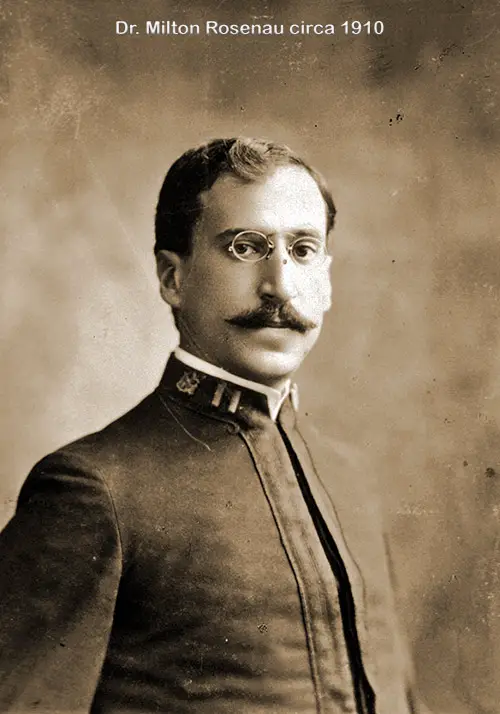
The central figure in these investigations was Dr. Milton J. Rosenau, director of the Hygienic Laboratory (the predecessor of today’s NIH) and one of the most respected public health authorities of his time.
Rosenau and his colleagues designed experiments that were strikingly direct by modern standards. Healthy volunteers—primarily young Navy sailors—were intentionally exposed to influenza patients using multiple methods believed to guarantee transmission:
- Close face-to-face contact with actively ill patients
- Inhalation of exhaled breath and cough aerosols
- Application of nasal secretions and sputum into volunteers’ noses and throats
- Injection of filtered material thought to contain the infectious agent
These were not casual exposures. They were extreme, controlled, and repeated.
Yet the expected outcome failed to materialize.
Despite aggressive attempts to induce illness, the vast majority of volunteers did not develop influenza. Rosenau himself reportedly acknowledged the baffling nature of the results, stating that the experiments had failed to reproduce the disease.
This was no small anomaly. If influenza were readily contagious via person-to-person transmission, these experiments should have succeeded.
They didn’t.
🏥 The Boston Experiments: More Exposure, Same Result
Around the same time, additional transmission experiments were conducted in Boston, again using military volunteers and hospitalized influenza patients. These trials mirrored the Rosenau protocols and included:
- Transfer of throat and nasal secretions
- Direct exposure to coughing patients
- Use of filtered material believed to contain the causative agent
Once again, researchers anticipated widespread illness.
Once again, it largely did not occur.
Reports from the time acknowledged the difficulty—if not impossibility—of reliably transmitting influenza under experimental conditions. The pathogen responsible for the pandemic remained elusive, and the results clashed with prevailing assumptions.
🌉 The San Francisco Trials: A Repetition of Failure
Similar efforts were undertaken on the West Coast, including San Francisco, where public health officials were grappling with severe outbreaks and strict mitigation measures.
Despite different populations, locations, and experimental teams, the outcome was consistent:
Direct exposure failed to reliably produce influenza.
These repeated failures were documented in medical literature of the era, though they were often framed as unresolved problems rather than reasons to reconsider fundamental assumptions about the disease.
❓ A Crisis Without a Clear Cause
The implications were enormous.
At the time, no influenza virus had been isolated. The prevailing belief was that a filter-passing agent (what would later be assumed to be a virus) was responsible—but laboratory proof remained absent. Instead, researchers relied on indirect evidence, assumptions, and later reconstructions.
Meanwhile, the pandemic raged on.
Public health authorities faced a dilemma:
- The disease was real.
- The suffering was real.
- But the mechanism of transmission was proving stubbornly resistant to experimental confirmation.
Rather than prompting a foundational re-examination, the failed experiments were gradually overshadowed by later developments in virology, the passage of time, and the institutional need for certainty.
🧠 Why Were These Results Forgotten?
Today, the Rosenau, Boston, and San Francisco experiments are rarely mentioned in mainstream discussions of the 1918 pandemic. They do not feature prominently in textbooks or popular histories.
Yet they raise enduring questions:
- Why did repeated, high-risk exposure experiments fail to transmit influenza?
- Were environmental, toxic, nutritional, or immune-related factors at play?
- Did the medical framework of the time misunderstand the nature of the illness?
- Or were the results simply too inconvenient during a moment of global crisis?
None of these questions negate the reality of the pandemic—but they complicate the story in ways that are seldom acknowledged.
🔎 A Historical Record That Still Challenges Assumptions
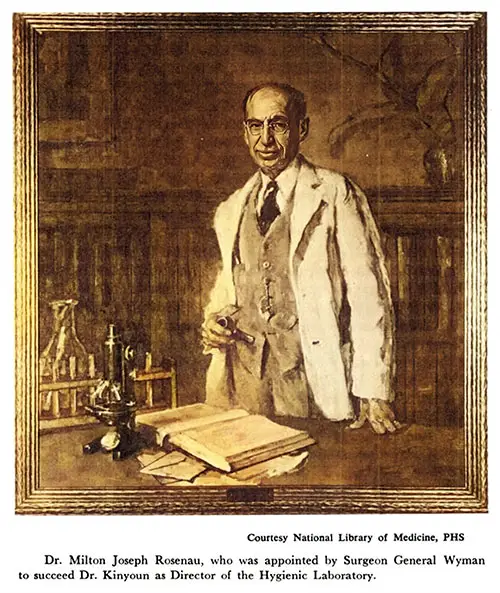
More than a century later, the Rosenau Experiment and its companion trials remain one of the most intriguing unresolved chapters in medical history. They stand as a reminder that science—especially during emergencies—does not always proceed cleanly, and that unanswered questions can quietly disappear when they conflict with dominant narratives.
The experiments did not end the pandemic.
They did not explain the disease.
But they did leave behind a record that still resists simple explanations.
And that record, once rediscovered, continues to provoke uncomfortable questions.
More detailed account: https://www.ggarchives.com/Influenza/TheRosenauExperiment-1918-1919.html