Table of Contents
- What Independent Vaccine Research Subscriptions Offer
- Evaluating Scientific Evidence for Parents
- How to Verify Vaccine Research Claims
- Critical Analysis of Vaccine Literature
- Institutional and Independent Research Resources
- Making Your Choice: What to Look For
- Frequently Asked Questions
Last Updated: October 7, 2026
What Independent Vaccine Research Subscriptions Offer
Parents seeking independent vaccine research often navigate conflicting information. Greg Wyatt’s 30-year investigative work into vaccine safety, autism causes, and health policy offers deep-dive independent vaccine research. Understanding what these subscriptions provide, and how they differ from mainstream medical sources, helps families make informed decisions.
Independent vaccine research resources typically document vaccine safety concerns, analyze clinical trial data, and examine potential connections between vaccines and health outcomes. They prioritize questioning conventional medical narratives and offering alternative interpretations, presenting arguments from researchers and practitioners who operate outside institutional constraints.
What sets independent research apart is the willingness to examine controversial hypotheses and present findings that contradict official health agency positions. Independent researchers often emphasize transparency about funding sources, conflicts of interest, and the limitations of peer-reviewed studies, an approach that appeals to families who feel dismissed by conventional medicine.
Evaluating Scientific Evidence for Parents
Most subscription pages tell you what they publish, not how to judge whether what you are paying for is actually independent.
Use this framework before committing to any independent vaccine research subscription. It focuses on decision-stage questions, not generic study-design trivia.
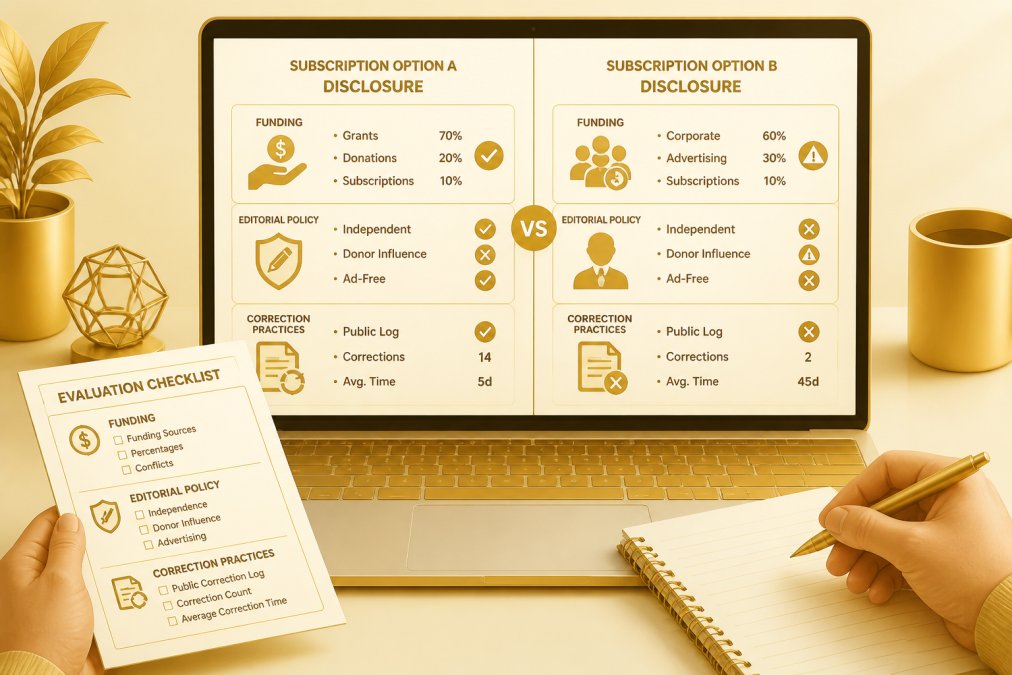
1. Funding and ownership disclosure. A credible subscription states who owns it, who funds it, and whether revenue comes from parties with a stake in vaccine policy or products.
2. Editorial independence policy. Independence is a process, not a vibe.
3. Evidence standards stated up front. A subscription should say plainly whether it prioritizes randomized controlled trials, observational cohorts, case reports, regulatory documents, or investigative interviews.
4. Peer review and internal review. Some publishers use external peer review, others internal editorial review, others publish raw documents with minimal commentary.
5. Conflict-of-interest handling. Look for a policy requiring contributors to disclose employment, consulting, grants, and speaking fees connected to vaccine manufacturers, health agencies, or advocacy organizations.
6. Source traceability. The strongest subscriptions link to primary documents: trial registries, regulatory filings, court records, freedom-of-information releases, and named interviews.
7. Correction and retraction practice. Every publisher gets something wrong eventually.
8. Update cadence and versioning. A subscription that timestamps articles, notes revisions, and flags superseded information is more useful than one publishing undated evergreen content.
Independence is not a claim a subscription makes about itself. It is a set of observable practices: funding disclosure, editorial policy, stated evidence standards, conflict-of-interest rules, source traceability, and public corrections. Score any subscription against those six items before you pay.
To apply this, run the same six questions against two or three subscriptions. The one that answers all six in writing, on its own site, without an email to support, is the one whose research you can evaluate on the merits. The one that answers vaguely is telling you how it will handle contested evidence later.
How to Verify Vaccine Research Claims
When you encounter a claim about vaccine safety or efficacy, several strategies help separate credible arguments from misleading ones. Start by checking whether the claim cites a specific study; if so, locate it and read the abstract and methods. Many claims misrepresent what studies actually found.
Check the author’s credentials and affiliation. Researchers at major universities or government agencies may face institutional pressure, but also have reputational incentives for rigor. Independent researchers have fewer constraints but may lack peer review and quality control. Neither context guarantees accuracy.
Examine the funding source. Government agencies, pharmaceutical companies, and nonprofits may all have incentives shaping research priorities and interpretation. Transparency about funding is a positive sign, even if the source is potentially biased.
Look for consistency across sources. If only one researcher or organization makes a claim while many others reach different conclusions, that discrepancy matters. If multiple independent researchers reach the same conclusion despite institutional pressure otherwise, that consistency strengthens the claim.
Be skeptical of absolute statements. Credible research includes caveats, acknowledges limitations, and avoids overstating findings. Claims presenting complex biological questions as settled should raise red flags.
Critical Analysis of Vaccine Literature
The vaccine literature encompasses peer-reviewed studies, regulatory documents, clinical trial data, case reports, and commentary from competing perspectives. Each source type has different evidence standards and potential biases.
Peer-reviewed journals provide quality control through expert review, but reviewers may share institutional assumptions that limit what questions get asked. Studies showing no vaccine-autism link have been published repeatedly in high-impact journals, but critics argue these have methodological flaws such as inadequate follow-up, failure to examine subpopulations, or reliance on vaccination records rather than direct medical assessment.
Clinical trial data submitted to regulatory agencies provides another layer. Agencies like the FDA review safety data before approving vaccines, but independent researchers argue trial designs may not capture rare adverse events, follow-up periods are often too short, and post-marketing surveillance fails to detect signals of harm.
Case reports and anecdotal accounts from families and practitioners document temporal associations between vaccination and health changes but cannot establish causation. Independent researchers argue clusters of similar cases or unusual patterns deserve investigation, even when large epidemiological studies have not confirmed a causal link.
The tension between these evidence types reflects deeper disagreements about interpreting uncertainty. Mainstream institutions prioritize population-level benefits and accept that some individuals may experience adverse effects. Independent researchers prioritize identifying and protecting individuals at risk, arguing institutional incentives minimize harm reports.
Institutional and Independent Research Resources
Most pages stop at ‘institutional versus independent.’ That framing is too blunt. What matters is what each resource gives you access to, who it is built for, and how paid subscriptions compare with free routes you may already have.
Institutional and public resources. Government health agencies, academic medical centers, and professional organizations publish vaccine recommendations, safety monitoring summaries, and plain-language explainers. They are typically free and updated on a defined schedule. Their strength is scale: population-level surveillance, large cohort studies, and standardized reporting.
Open-access journals and public databases. Much vaccine research is reachable without a subscription. Open-access journals publish peer-reviewed studies in full. Trial registries show how a study was designed before results were reported. Regulatory portals publish approval reviews and safety summaries. Many public and university libraries provide free or low-cost access to paywalled journals.
Independent research subscriptions. These are the products the query is actually about, and they vary widely. In practice, most fall into a few recognizable shapes:
- Investigative/documentary subscriptions: long-form investigations, interviews with practitioners and families, and analysis of policy and funding history. Best for readers who want narrative depth and institutional critique rather than raw data.
- Literature-review subscriptions: curated summaries of published studies with commentary, often organized by topic or by vaccine. Best for readers who want help triaging a large volume of papers.
- Alert and digest services: regular emails or feeds flagging new studies, regulatory actions, and policy changes. Best for readers who want to stay current without reading everything.
- Community-plus-content memberships: articles bundled with forums, Q&A, or live sessions. Best for readers who want peer discussion alongside the research.
- Archive and document libraries: searchable collections of primary documents, filings, and historical records. Best for readers doing their own analysis.
Matching the resource to the reader. The right choice depends on your goal:
- Parents making a personal decision: a literature-review subscription or curated digest is usually more useful than a raw document archive, because it triages volume for you.
- Researchers and analysts: document libraries and trial-registry access matter more than commentary; you want primary sources.
- Journalists: investigative subscriptions with named sourcing and document links are most useful, because they give you leads you can verify independently.
- Policymakers and advocates: policy-history and funding-analysis subscriptions tend to be more relevant than clinical literature summaries.
- General readers new to the topic: start with free open-access journals and public databases before paying. You will learn what you actually need.
Free and lower-cost routes worth exhausting first. Open-access journals, trial registries, regulatory portals, public library journal access, and publisher newsletters collectively cover much of what paid subscriptions offer. Paid subscriptions earn their place when they save time, add original investigation, or provide a community you cannot get elsewhere.
Before subscribing, spend one week using only free routes: open-access journals, a trial registry, and your library’s journal access. Note what you could not find or could not interpret. That list is your actual shopping criteria for a paid subscription, and it will be more specific than any generic ‘best subscriptions’ list.
Trial periods and cancellation terms. Because subscription value is hard to judge from a landing page, prioritize services offering a trial period, a monthly option, or a clear cancellation process. Read cancellation terms before entering payment details, and check whether the archive remains accessible after cancellation. A subscription that locks its archive behind continued payment is a different product from one that lets you keep what you downloaded.
Making Your Choice: What to Look For
Choosing research resources depends on your priorities and the questions you’re trying to answer. If you’re evaluating vaccine safety for your family, consider what information would actually change your decision-making.
Some families want reassurance that vaccines are safe. Mainstream institutional sources provide that through large-scale safety monitoring data. If that’s your goal, institutional resources may serve you well.
Other families have experienced health changes they believe are vaccine-related and want validation and support. Independent research resources and community forums provide that and connect you with others who share similar experiences.
Still others want to understand institutional decision-making, funding relationships, and policy history. Greg Wyatt’s investigative work offers insights into these areas, examining how vaccine schedules developed, what conflicts of interest shaped policy, and how institutions responded to safety concerns.
Consider what type of evidence persuades you. If you prioritize large randomized controlled trials and population-level data, institutional sources align with your standards. If case reports, anecdotal evidence, and documentary investigation are more compelling, independent resources offer that approach.
Be honest about confirmation bias. All sources, institutional and independent, can reinforce existing beliefs. The most rigorous approach involves seeking sources that challenge your assumptions, not just validate them.
Finally, consider cost and access. Subscription services require ongoing payment, while institutional sources and many independent resources are free. Your budget and how much time you want to invest should factor into your choice.
Families navigating vaccine decisions deserve access to research and analysis that takes their concerns seriously.
Frequently Asked Questions
How can parents access independent vaccine research?
Parents can access independent vaccine research through institutional resources like the Institute for Vaccine Safety, peer-reviewed journals such as the New England Journal of Medicine, and investigative research from independent researchers who have spent decades examining vaccine policy and safety data. Greg Wyatt’s 30-year investigative work provides documentary evidence and interviews that offer an alternative perspective on vaccine-related research. When evaluating any source, verify the researcher’s methodology, examine their use of primary data versus secondary interpretation, and assess whether their conclusions follow from the evidence presented.
What should you look for when evaluating vaccine research sources?
When assessing vaccine research sources, examine who funds the research, what specific evidence the author cites, whether they distinguish between correlation and causation, and how they handle contradictory findings. Look for researchers who present their methodology clearly, cite primary sources rather than secondary summaries, and acknowledge limitations in their work. Independent researchers should disclose any financial interests, speaking fees, or organizational affiliations. Cross-reference claims against multiple sources and ask whether the researcher’s conclusions logically follow from the data they present, rather than overstating what the evidence shows.
How does independent research differ from institutional vaccine studies?
Independent research operates outside traditional institutional frameworks and may examine questions that institutional researchers do not prioritize. Institutional studies typically follow standardized peer-review processes and regulatory oversight, while independent researchers operate with fewer formal constraints but also less institutional accountability. Both approaches have value: institutional research provides systematic validation, while independent investigation can explore alternative hypotheses and examine policy decisions in depth. The key distinction is not independence versus credibility, but rather understanding each source’s methods, funding, and what questions they are designed to answer.
Are there reliable alternatives to mainstream vaccine information?
Yes. Reliable alternatives include the Institute for Vaccine Safety, which independently assesses vaccines to inform policy and individual decisions; peer-reviewed medical journals that publish vaccine research; Your Local Epidemiologist, which provides seasonal vaccine guidance; and independent researchers like Greg Wyatt who have conducted extensive investigative work examining vaccine policy, safety data, and the health freedom movement. The distinction between reliable and unreliable sources lies in transparency about methodology, willingness to address contradictory evidence, and clear disclosure of funding or organizational ties rather than whether the source aligns with mainstream consensus.