
Table of Contents
- What Early Signs of Autism in Toddlers Look Like
- Social Communication Delays in Toddlers: What to Notice
- Repetitive Behaviors in Toddlers: Examples and Patterns
- Autism Developmental Milestones Checklist
- Sensory Sensitivities and Unusual Responses
- When to Seek an Autism Evaluation
- Supporting Your Family Through Early Identification
- Frequently Asked Questions
Last Updated: September 26, 2026
What Early Signs of Autism in Toddlers Look Like
Early signs of autism in toddlers are developmental differences that show up in how a child communicates, plays, and interacts with others. These signs typically emerge between 12 and 36 months, though some parents notice differences earlier (Early Identification of Autism). Recognizing these patterns matters because early identification opens doors to support and intervention during critical developmental windows.
The signs vary widely from child to child. Some toddlers show obvious delays in speech or social engagement. Others display intense, focused interests or repetitive movements that seem unusual for their age. Many parents describe a feeling that something is different, not necessarily wrong, but distinctly different from what they expected or what they see in other children.
What makes this challenging is that toddler development is genuinely variable. Typical toddlers also have quirks, routines, and moments of social withdrawal. The difference lies in the pattern, intensity, and persistence of behaviors. A child who occasionally lines up toys is different from a child who only lines up toys and becomes distressed when the arrangement changes.
This guide from Greg Wyatt draws on extensive investigation into the intricate connections between vaccines, autism, and the health freedom movement, offering unfiltered, passionate insights designed to empower families seeking answers and truth regarding autism causes and vaccine-related research. Understanding what to observe, and what those observations might mean, helps parents make informed decisions about their child’s development and next steps.
Social Communication Delays in Toddlers: What to Notice
Social communication encompasses how a child connects with others through eye contact, facial expressions, gestures, and language. Delays in this area are among the most commonly recognized early indicators of autism.
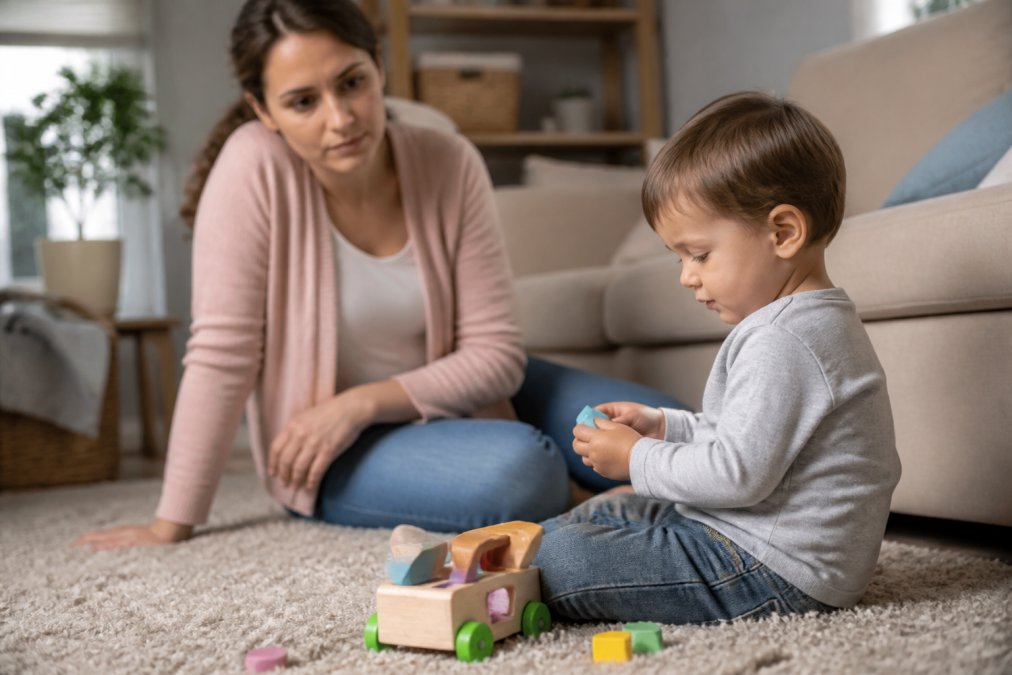
Eye contact and facial expressions
Many toddlers naturally avoid eye contact when they’re overwhelmed or focused on something interesting. But children with autism spectrum disorder often show a consistent pattern of reduced eye contact across different contexts and people. This isn’t shyness that improves with familiarity, it’s a persistent difficulty with the social aspect of looking at faces.
Watch for whether your toddler glances at your face when excited, upset, or seeking approval. Typical toddlers regularly check in visually with caregivers, especially in new situations. They look toward you when they hear your voice. They watch your facial expressions to gauge whether something is safe or exciting.
Facial expressions themselves may differ. Some autistic toddlers show limited range in their expressions, fewer smiles, less obvious reactions to funny moments, or delayed responses to social cues. Others may have expressions that don’t match the situation, like laughing when frustrated or showing no reaction to something that would typically delight a toddler.
Verbal and non-verbal communication patterns
Speech delay is one of the most frequently reported early signs, though not all autistic toddlers have delayed speech. Some speak on schedule or even early. The difference often lies in how they use language.
Pay attention to whether your toddler uses words to communicate with you versus simply labeling objects. A toddler saying “dog” when they see a dog is different from a toddler saying “dog” to request a walk to see dogs or to share excitement about the dog. The first is labeling; the second is social communication.
Non-verbal communication, pointing, gesturing, waving, develops early in typical toddlers. By 12 months, most toddlers point to show you things they find interesting. They wave goodbye. They reach up to be picked up. Children with autism may show delays in these gestures or use them inconsistently. Some point to request things but not to share interest or draw attention to something they find fascinating.
Babbling patterns sometimes differ too. Typical toddlers experiment with sounds, string them together, and gradually shift toward words. Some autistic toddlers have reduced babbling or babbling that sounds repetitive and less varied in tone and rhythm.
Repetitive Behaviors in Toddlers: Examples and Patterns
Repetitive behaviors in toddlers can include hand movements, body movements, play patterns, and intense focus on specific objects or topics. These behaviors serve different purposes, sometimes self-soothing, sometimes pure enjoyment, sometimes a way of organizing a world that feels unpredictable.
The key distinction is intensity and inflexibility. Many toddlers enjoy repetition. They want the same book read repeatedly. They spin in circles. They line up toys. But typically, they also do other things. They tolerate changes. They engage with variety when offered.
Hand movements and body movements
Hand flapping, finger flicking, spinning, and hand posturing are common examples. These movements might happen when a child is excited, overwhelmed, or simply focused on the sensation. Some autistic toddlers engage in these movements frequently throughout the day.
Watch for whether your toddler uses their hands in typical ways, pointing, gesturing, reaching, alongside any repetitive movements. Typical toddlers who flap their hands while excited still point, wave, and use their hands functionally. Autistic toddlers may show repetitive movements more prominently or in place of more varied hand use.
Body movements like spinning, running in circles, or rocking can be soothing or enjoyable. The question isn’t whether these happen, it’s whether they’re the primary way your toddler moves and plays. Does your child engage in other types of physical play? Can they transition to different activities, or do they return to the same movements repeatedly?
Restricted interests and play patterns
Typical toddlers explore toys in multiple ways. They bang, throw, mouth, roll, and build with blocks. They engage in pretend play, feeding a doll, pushing a toy car, making animal sounds.
Children with autism may show restricted play patterns (Restricted and repetitive behaviors in autism spectrum disorders). A toddler might line up cars in perfect rows and become distressed if the arrangement is altered. Another might be fascinated by spinning wheels and ignore the rest of the toy. A third might focus exclusively on letters or numbers, arranging them, naming them, but not using them in typical play.
Pretend play often develops differently. Some autistic toddlers show little interest in imaginative play.
Autism Developmental Milestones Checklist
This checklist reflects common developmental milestones and variations that parents and caregivers often observe. Use it as an observation tool, not a diagnostic instrument. Every child develops at their own pace, and variations exist within typical development.
| Developmental Area | Typical Pattern | Pattern That May Warrant Observation |
|---|---|---|
| Eye contact (12-18 months) | Looks at faces, makes brief eye contact, responds to name | Rarely looks at faces, doesn’t respond to name, avoids eye contact consistently |
| Pointing (12-18 months) | Points to show you things, points to request items | Doesn’t point, or only points to request without sharing interest |
| Babbling (6-12 months) | Varied sounds, back-and-forth babbling with caregiver | Repetitive sounds, reduced babbling, little response to caregiver’s voice |
| First words (12-24 months) | Uses words to communicate, understands simple requests | Delayed speech, words don’t seem communicative, difficulty understanding |
| Play (12-24 months) | Explores toys in varied ways, engages in pretend play | Repetitive play patterns, lines up toys, limited pretend play |
| Social interest (12-36 months) | Seeks out other children, shows interest in peers | Prefers solitary play, shows little interest in other children |
| Transitions (18-36 months) | Moves between activities with occasional resistance | Becomes very upset with changes, needs extensive preparation for transitions |
| Sensory responses (12-36 months) | Typical reactions to sounds, textures, lights | Covers ears at normal sounds, unusual reactions to textures, seeks intense sensory input |
Sensory Sensitivities and Unusual Responses
Many autistic toddlers experience sensory differences, heightened sensitivity to sounds, textures, lights, or tastes, or conversely, reduced sensitivity to pain or temperature (Sensory Processing in Autism: A Review of Neurophysiologic Findings). These aren’t behavioral problems. They’re genuine differences in how the nervous system processes sensory information.
When to Seek an Autism Evaluation
Deciding whether to pursue an evaluation is deeply personal. There’s no single moment when you “must” seek assessment. Instead, consider evaluation if you notice a persistent cluster of differences that concern you, if your child’s development seems notably different from peers, or if you have a family history of autism.
Supporting Your Family Through Early Identification
Learning that your child may have autism, or receiving an autism diagnosis, triggers different responses in different families. Some parents feel relief, finally, a framework for understanding their child. Others experience grief, worry, or uncertainty about the future.
Both responses are valid. Both deserve support.
Frequently Asked Questions
What are the first signs of autism in a 2-year-old?
At age 2, watch for limited eye contact, delayed speech or unusual speech patterns, difficulty with joint attention (pointing to share interest), and repetitive movements like hand flapping or spinning objects. Many toddlers with autism show reduced interest in social interaction, prefer playing alone, and may not respond to their name. Some regression in developmental milestones or skills they previously had can also signal early signs of autism in toddlers.
How do I use an autism developmental milestones checklist to track my toddler’s progress?
An autism developmental milestones checklist helps you track communication, social skills, play behavior, and motor development against typical age ranges. Document specific examples: Does your toddler point to share things? Do they understand simple instructions? Do they imitate sounds or gestures? Compare observations across several weeks rather than single instances. Share your checklist with your pediatrician to identify patterns that may warrant further evaluation.
When should I be concerned about repetitive behaviors in toddlers and seek evaluation?
Repetitive behaviors become a concern when they occur frequently, interfere with play or learning, or increase in intensity. Examples include lining up toys rather than playing with them, repetitive hand movements, spinning, or intense focus on specific objects. If these behaviors dominate your toddler’s play and they show little interest in other activities, discuss this with your pediatrician. Early intervention services can provide screening and support.
How do social communication delays in toddlers differ from typical language development?
Typical toddlers use words to communicate needs, point to share discoveries, and respond to their name. Toddlers with social communication delays may not point to share interest, struggle to understand simple requests, show little desire to interact with peers, or use words without understanding their social purpose. They may repeat words (echolalia) without meaningful communication intent. If your toddler isn’t meeting communication milestones by 18-24 months, seek evaluation from a developmental pediatrician or speech specialist.